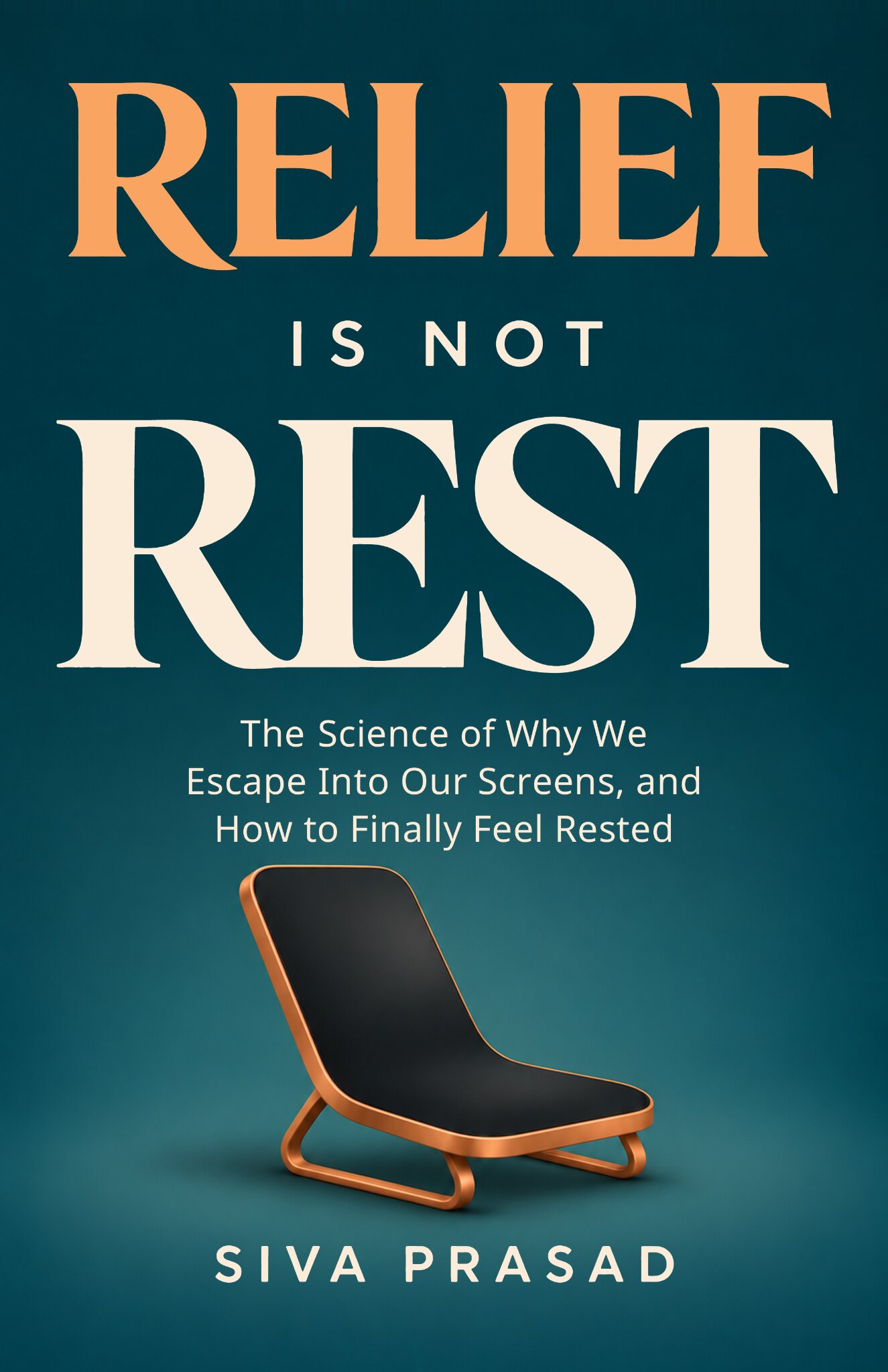
Free reader companion · From Relief Is Not Rest
Thirty days. About ten minutes a day. One habit.
This is the 30-day SHIFT plan from the book, built so you can run it here. Tick off each day, keep your urge diary, write your if-then plan, and finish with a one-page rest plan you can print. It asks you to change very little at a time.
Free · No signup · Your progress stays in this browser · From Relief Is Not Rest: The Science of Why We Escape Into Our Screens, and How to Finally Feel Rested
Understanding why you reach for your phone doesn't stop you reaching for it. What changes things is smaller: one evening you notice your hand moving, and you do something else. SHIFT is that move, made repeatable.
The first three steps happen in the moment. The last two happen in advance, and they're what make the first three easy. The plan gives each step six days, and nothing is dropped when a new step begins: each one is added to the last.
They exist to stop SHIFT turning into one more strict regime to fail at. They matter more than any single day's task.
Interactive companion · The Body's Messengers
Zoom from the whole body to a single connection between two brain cells. Follow danger, worry, anxiety, the pull of a habit and recovery as they travel through you, and see why the same scroll feels weaker over time.
Explore the bodyThree small decisions. Your answers are saved in this browser as you type.
Not your whole relationship with your phone. One reach: the late-night scroll, the inbox, the news at breakfast, the videos when a task gets hard. You'll work with that one for all thirty days. What you learn will spread to the others without your help.
Tick a day when you've done its task. Tap any box in the tracker to jump to that day. Nothing here resets if you miss a day.
The plan points to these on the days you need them. They keep what you write on this device only.
Days 7 to 12 · Hear the need
Two or three lines a day. Fill in the last column a little while after each reach, honestly. When you can't tell what you needed, run the five on your fingers.
| When | Feeling | Reached for | Needed | Got it? | Remove |
|---|
No entries yet. Your first one is the hardest; it gets quicker.
Day 13 · Insert rest
One plan for your top need at its main hot spot. Write it where the cue happens, and read it once each morning for the first week.
Four tests before you accept it
Didn't happen at least three times by day 18? Don't blame yourself. Ask: wrong need? Too big? Not ready at the cue? Change one thing.
Day 30, then every Sunday · Five minutes
Rest has more than one direction. Most of us are short in one of them and keep trying to fix it with rest of a different kind. Slide each one to how this week actually went.
Day 30 · Keep it for a bad week
This gathers the whole thirty days on to one page you can print and come back to.
A slip is data, not failure. I start again from S.
Prints your rest plan, your if-then plan and your thirty-day tracker on one sheet.
Thirty days is enough to begin a habit, not to finish one. In the study the book draws on, the midpoint for a new behaviour to become automatic was about two months, and for many people it took longer. So don't expect the urge to be gone. Expect it to be something you see sooner, understand better, and have an answer for.
Take your second-commonest need from your diary and write an if-then plan for it. Never more than three at once.
Four questions, five minutes: body, mind, people, purpose. One small step in whichever direction is lowest.
Take out your one-page rest plan. See it. Hear the need. No lecture.
Want to go round again with a different habit? The plan works just as well the second time. Most people find it much easier, because the hardest part, learning to see, has already been done.
You never have to win the whole day.
Choosing rest once, today, counts.
Leave your email and Siva will send the printable tracker, plus a short note at the start of each of the five steps. Your ticks and diary stay on your device either way.
Every day's task points back to a chapter: why stress makes the phone feel like rest, why relief takes the place of rest without restoring anything, how dopamine sells the reach, and how a habit gets built so you can unbuild it.
Eighteen chapters in four parts: why we need relief, how counterfeit relief works, what happens inside the brain, and SHIFT, the way back to real rest.
Burnout rarely looks like burnout. It looks like a team that's always online and never rested. This session gives people a shared question, "Is this relief, or rest?", and one week of the plan to try together.